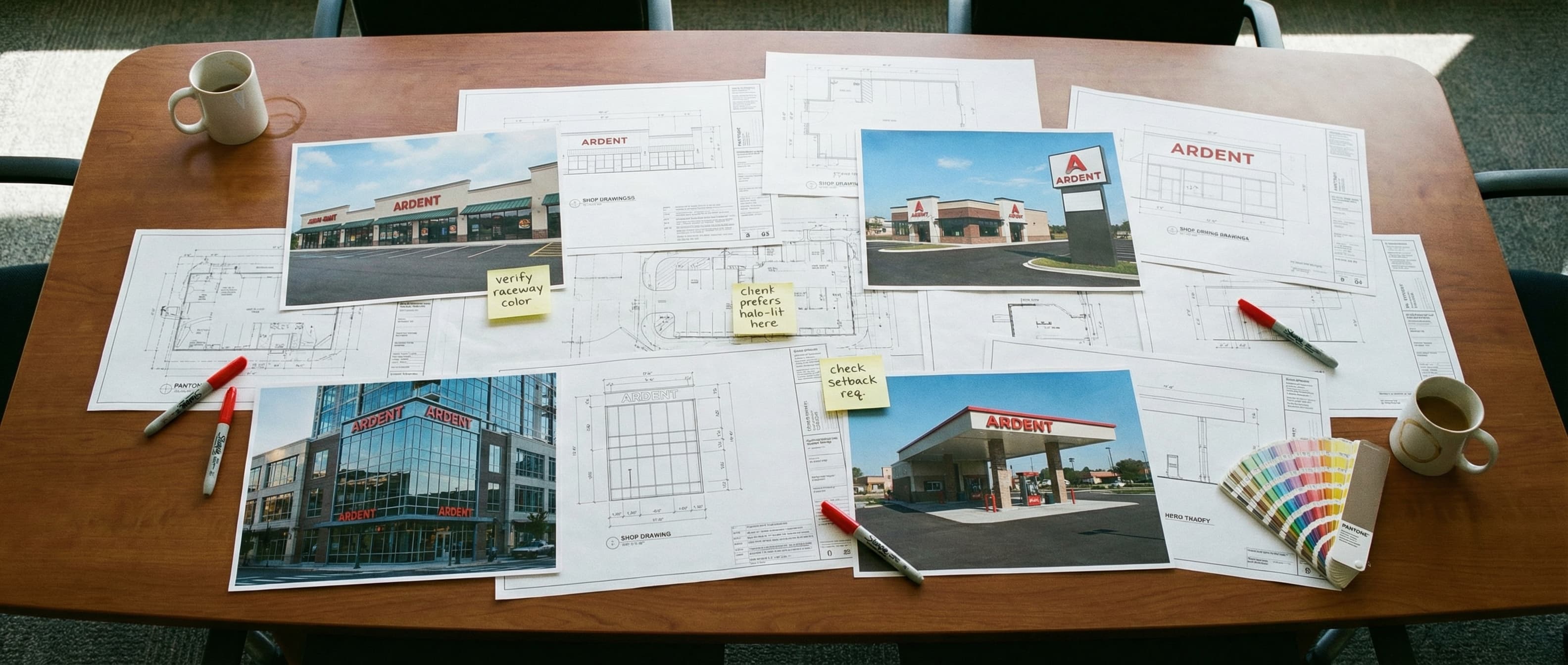
Environmental & interior graphics
What we do
Environmental graphic design, or EGD, is what happens when graphic design steps off the screen and onto the building: the logo at twenty feet on a lobby wall, the timeline that wraps a corridor, the donor names cut into the entry, the floor pattern that pulls you toward the elevators. Graphic design you walk through instead of scroll past.
We work the EGD side that gets built, translating a brand and an interior concept into graphics that hold up at architectural scale. We draw it, and we don't fabricate or install. What we hand off is a set a millwork shop, a sign fabricator, or a GC can build from. It sits alongside the rest of our signage design work.

Supergraphics & wall graphics
Type and image at architectural scale, specified for paint, vinyl, or print.
Learn moreBranded environments
A space that speaks the brand as one system of graphics, materials, and signage.
Learn more





Who we work with


Architects
Documentation that drops into your set, drawn to the standard the rest of the package already holds.

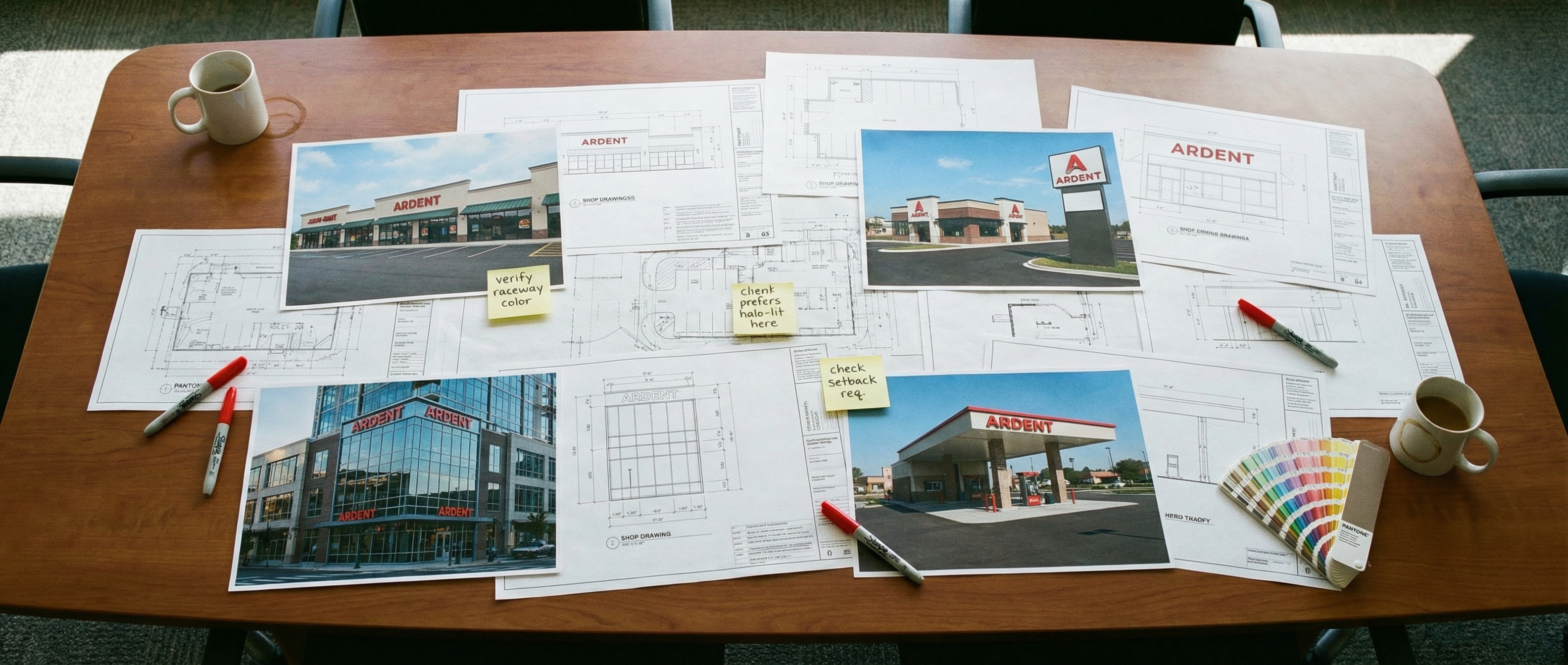
Interior and brand designers
A partner who takes your concept and makes it buildable at wall scale without flattening the idea.


Brands
Identity carried into headquarters, flagships, and lobbies so the space says the same thing the brand does.
Environmental graphic design, answered
Didn't find your question? Ask us directly — straight answers, no runaround.
- What is environmental graphic design?
- Environmental graphic design (EGD) is the design of graphics and signage that live in a physical space: feature walls, donor recognition, placemaking, dimensional graphics, and wayfinding. It's the discipline the Society for Experiential Graphic Design defines, sitting where graphic design, architecture, and signage overlap. In plain terms, it's how a brand or an idea gets built into a building.
- How is EGD different from signage?
- Signage is one piece of EGD. A directional sign is signage, but a two-story brand wall, a donor installation, and a floor graphic that pulls you toward the entrance are environmental graphics that aren't signs at all. EGD is the broader practice of shaping how a space looks, reads, and guides people, and signage is the part of it that names and directs.
- Do you design interior signage as part of EGD?
- Yes, and it's usually the best way to buy it. The interior sign package (suite IDs, directories, wayfinding, code signage) gets designed inside the same system as the feature walls and placemaking. The parts that have to meet ADA are specified to code from the first sketch.
- What's experiential graphic design?
- Experiential graphic design is the same discipline as environmental graphic design. The field's professional body, SEGD, uses “experiential” to take in work that's interactive, digital, or media-rich on top of the built graphics. For most projects the terms are interchangeable. We use “environmental” for the graphics that get fabricated and installed in a space.
Read more



Good signage
starts with a conversation.
Every project is different. Let’s talk about yours.